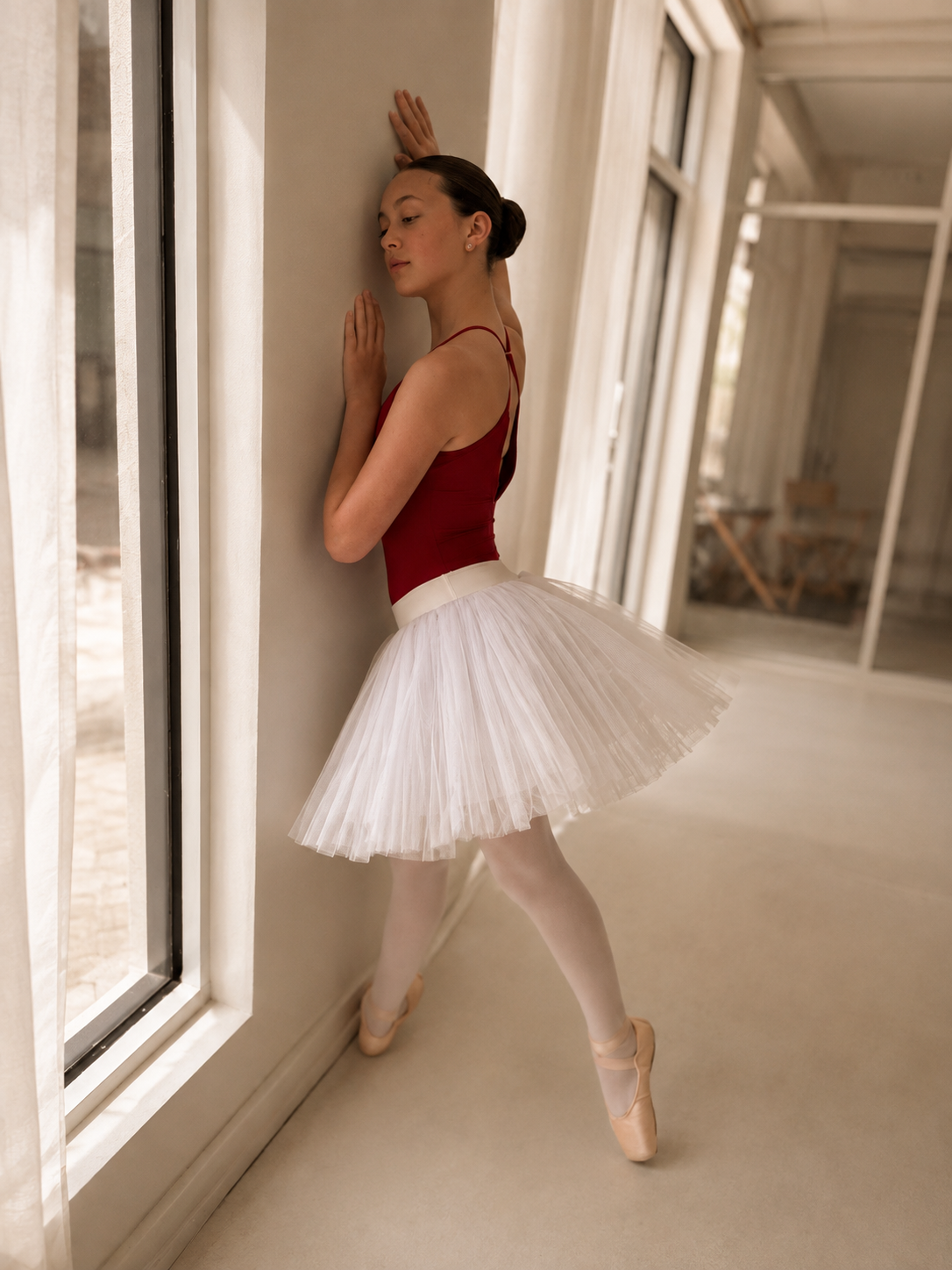
Why The American Ballet Curriculum matters to a child’s education and how it shapes Ayala Ballet Conservatory.

American Ballet Theatre® National Training Curriculum

A thoughtful pathway for healthy, artistic, and lasting development.

At Ayala Ballet Conservatory, a love of ballet begins with exceptional teaching. Our classical training is guided by the American Ballet Theatre® National Training Curriculum, a carefully structured system designed to support dancers through every stage of their technical, physical, and artistic development.

The curriculum gives our students something more meaningful than a series of classes. It gives them a clear educational pathway, where every movement has a purpose, every level prepares the next, and advancement is built upon true understanding rather than haste.

Strong dancers are not created by rushing toward difficult steps. They are developed through patient, intelligent, and beautifully sequenced training.


A Curriculum Designed Around the Dancer

The American Ballet Theatre® National Training Curriculum is an age-appropriate and outcome-based framework that brings together classical ballet technique, dancer health, child and adolescent development, anatomy, musicality, artistry, and healthy training practices.

This means our teachers consider not only which steps a child is ready to learn, but how their body is developing, how they process corrections, how confidence is built, and what foundation must be established before more complex movement is introduced.

Students learn in an environment where ambition is encouraged, but healthy development is never sacrificed for speed.


Every Level Has a Purpose

Ballet is an interconnected system. A plié prepares the body to jump. A tendu teaches articulation, alignment, and the use of the floor. Port de bras develops coordination, expression, and the relationship between movement and music.

These fundamentals are not exercises to move through quickly. They are the architecture of everything that follows.

Through the ABT National Training Curriculum, students progress from simple concepts toward increasingly sophisticated technique in a logical and developmentally appropriate sequence. When foundations are carefully built, advanced movement becomes safer, freer, and more expressive.


Training the Whole Dancer

Classical ballet education should develop more than strength and flexibility. It should cultivate concentration, resilience, musical intelligence, curiosity, confidence, and the ability to communicate through movement.

Our students are taught to understand their bodies rather than simply imitate shapes. They learn why corrections matter, how individual exercises connect, and how thoughtful repetition creates lasting physical understanding.

They also learn to listen, observe, persevere through difficulty, and take pride in progress that is earned patiently.


Artistry from the Beginning

Technique and artistry are never treated as separate parts of a dancer’s education.

From the earliest levels, students are introduced to musicality, épaulement, intention, imagination, and expressive movement. They learn that a tendu is not only a technical action and that port de bras is not simply the placement of the arms.

Every movement carries rhythm, energy, direction, and meaning. As technique becomes more refined, imagination is not left behind. It becomes the bridge that leads dancers toward artistry.


One Standard. An Individual Path.

Every student enters the studio with a different body, personality, learning style, level of experience, and dream.

The strength of the ABT National Training Curriculum lies in its ability to provide a consistent educational structure while allowing teachers to adapt pacing and instruction to the needs of the individual dancer.

One class may need additional time to develop posture, turnout, coordination, or confidence. Another may be technically secure but require greater attention to musical interpretation and performance quality.

The standard remains strong. The path toward that standard is taught with intelligence, flexibility, and respect for the child in front of us.


Examinations with Purpose

ABT examinations provide students with clear goals, thoughtful feedback, and the opportunity to demonstrate their development within a respected international curriculum.

At Ayala Ballet Conservatory, examinations are not used to create comparison or unnecessary pressure. They are part of an educational process that allows dancers, families, and teachers to recognize progress, identify areas for continued growth, and reflect upon the work completed throughout the year.

Students learn that assessment is not a judgment of their worth. It is an opportunity to understand their training more deeply and move forward with confidence and purpose.


A Tradition of Classical Training

The American Ballet Theatre® National Training Curriculum draws from the traditions of the French, Italian, and Russian schools of classical ballet. It brings these influences together within a unified system designed for today’s dancers.

This approach allows students to develop a broad understanding of classical technique while learning the placement, coordination, musicality, and stylistic awareness necessary for advanced study.


Led with Knowledge and Care

The implementation of the curriculum is overseen by Director Myriam Ayala, an American Ballet Theatre® Certified Teacher who has completed teacher training in the ABT National Training Curriculum.

Her work with the curriculum has shaped the educational structure of Ayala Ballet Conservatory, from the careful sequencing of individual classes to the complete progression from the Lower School through advanced conservatory training.

The curriculum provides the structure. Our faculty brings it to life through thoughtful teaching, meaningful imagery, precise correction, and a genuine belief in the potential of every student.


Why This Matters for Your Child

Parents may not immediately recognize the difference between a ballet class and a complete ballet education.

The difference is found in what happens over time.

It is found in a child who understands their body instead of forcing it. In a dancer who receives corrections without losing confidence. In a student who knows that discipline is not punishment, but the pathway toward freedom and accomplishment.

It is found in training that protects childhood while preparing the dancer for everything that may come next.

Every child deserves ballet training that respects how they learn, how they develop, and who they may become.


Explore the Training Pathway

Discover how the American Ballet Theatre® National Training Curriculum guides students from their earliest foundations through advanced classical ballet training at Ayala Ballet Conservatory.

Explore the Lower School →

Explore the Upper School →

Find the Right Program →